Posted in Pure Physics

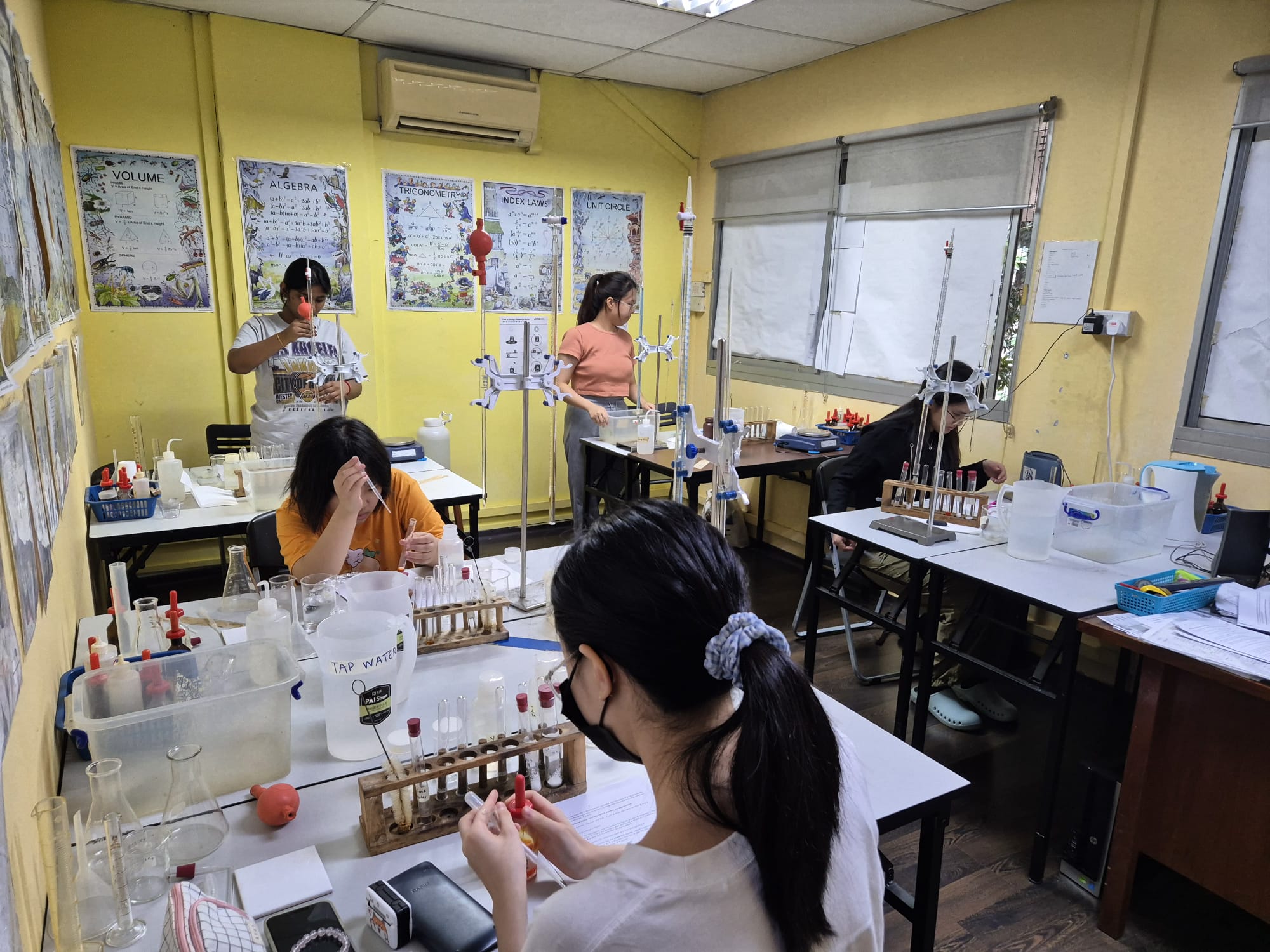
Reflections on Sec 4 Physics class (9/12/12) …

Just like in the Sec 4 A Math class ytdy, we revised Sec 3 Physics instead, but I will move on to Electricity in Jan 2013. The two students in this class are from Nan Hua and NJC, in case you want to know, although I find it strange that parents ask me which schs the students come from (I’ll write another article soon – ‘The kinds of parents who call me’). C’mon, if you are weak in Physics, you are weak in Physics, even if you are a graduate from Harvard. Apparently, parents are concerned about the syllabi. However, let me tell you something – even two IP schs or two non-IP schs can be at different topics in Physics at the same time. As for level of difficulty, Sec 4 Physics is Sec 4 Physics; no IP sch is going to teach Quantum Physics at Sec 4 ok, except, maybe, NUS High. In fact, some O-level sch prelim papers are harder than those of the IP schools.

We covered Kinematics and Moments ytdy, and as usual, students have misconceptions about free-falling objects, free body diagrams, kinematics graphs and what constitutes ‘perpendicular distance’ and ‘line of action of the force’ in the calculation of moments. Since they were new students, I also listed the 6 ways that examiners make physics questions difficult, and these have nothing to do with physics! (I will post an article abt this some time soon). Every year, I find that students THINK that they know Kinematics and Dynamics, but they can’t answer some conceptual questions I ask. Even some JC students have actually not understood their Sec 3 Physics!

Ilyasa

Related post:

(1) Sec 4 Physics tuition.

Posted in A. Math, Sec Math

Reflections on Sec 4 A. Math class (9/12/2012) …

Two new students joined us ytdy, one from Monfort Sec and one from SCGS. Apparently, I tutored the latter’s cousin a few yrs ago, all the way from Sec 2 to JC2 in Math and Physics, and who is now a first year undergrad; just learnt that he scored 2 A’s and 2 B’s in his A-levels (he might have told me about it); anyway, that proves my point, that you can come from a ‘neighbourhood’ sec sch and then go to a ‘low-ranked’ JC and still do well at the A-Levels. Contrast this with the two ex-IP students that I helped this year to re-take their A-Levels. So students out there pls wake up; no one owes you good grades.

The three tutees agreed to revise some sec 3 topics instead of me teaching them a Sec 4 topic. So for this class (Sat 2.15 to 3.45pm), I will only start teaching Differentiation in Jan 2013. So ydty two of them covered Indices, Surds and Log while the remaining one wanted to revise Trigonometry. Every time, I find joy in proving to students that Logarithms is a VERY EASY topic. Once you understand what a logarithm is, everything about it becomes very easy (I’ve posted another article on Log; pls do a search on it, under A Math study tips I think).

Trigo is a much harder topic, especially the proving of some Trigonometric Identities. However, there are heuristics to use in solving the latter, and these techniques work 95% of the time. I like ‘proving’ qns because there is no answer to find, and students normally dislike such qns precisely because there is no answer to find. But I can’t blame them; imagine spending 6 yrs of your life in pri sch only learning how to find answers, so students become obsessed with finding a numerical answer, and eventually get defeated by qns that ask them to prove something already known.

Ilyasa

Related pages:

(1) A. Math study tips.

(2) Sec 4 A. Math tuition.


Posted in Sec Math, Sec Science

SEC 1 / SEC 2 MATH & SCIENCE TUITION 2013 @ Bukit Batok


For our latest timetable, click here =>  secbutton

=============================================================

ORIGINAL POST (OUTDATED):


Sec 2 Math (Investment amount: $120 per mth):

Wed 4.00 pm – 5.30 pm; (4 vacancies)

Sun 12.30 pm – 2.00 pm; (3 vacancies)

Tutor(s):

Mr Teng K. S., NTU undergrad majoring in Math.

Mr Ilyasa; M.Ed (NIE), PGDE (NIE), BSc (NUS), A-Level (RJC); ex-sch teacher, full-time tutor (8 years) of PSLE, O and A Level Math and Physics.

Sec 2 Science (Investment amount: $120 per mth):

Fri 4.00 pm – 5.30 pm; (4 vacancies)

Sun 10.45 am – 12.15 pm; (3 vacancies)

Sec 1 Math (Investment amount: $120 per mth):

Tue 4.00 pm – 5.30 pm; (4 vacancies)

Sec 1 Science (Investment amount: $120 per mth):

Thur 4.00 pm – 5.30 pm; (4 vacancies)

Tutor(s):Mr Ilyasa; M.Ed (NIE), PGDE (NIE), BSc (NUS), A-Level (RJC); ex-sch teacher, full-time tutor (8 years) of PSLE, O and A Level Math and Physics.

To register, kindly send an sms to 97860411, indicating the Student Name, Subject and Level.

Posted in Headstart Classes, Holiday Classes, Sec Math

Sec 1 Algebra Headstart Holiday Enrichment Programme for post-PSLE students

For our latest timetable, click here =>  secbutton

=============================================================

ORIGINAL POST (OUTDATED):


From my 8 years’ experience coaching secondary students in Math, I found that even students who scored A-star in PSLE Math can end up doing badly in secondary Math. The main reason can be attributed to a poor grasp of Algebraic fundamentals in Sec 1 and Sec 2. Thus I see the need to provide post-PSLE students with a Math programme that introduces them to concepts in Algebra.

The details of the 2-day, 6-hr programme are as follows:

Date/Time (choose one pair of sessions only):

(1) Thurs 15 Nov (4.30 pm to 7.30 pm) and Fri 16 Nov (4.30 pm to 7.30 pm);

(2) Thurs 29 Nov (4.30 pm to 7.30 pm) and Fri 30 Nov (4.30 pm to 7.30 pm);

Location: Blk 627, Bukit Batok Central, 07-640.

Class size: Max 6 students.

Investment amt: $120 total for both days (6 hrs).

Tutor:  Mr Ilyasa; M.Ed (NIE), PGDE (NIE), BSc (NUS), A-Level (RI); ex-sch teacher, full-time tutor (8 years) of PSLE, O and A Level Math and Physics.

To book a place in the programme, sms to or call Mr Ilyasa at 97860411.

Related post: Beware the critical years in math education in Singapore …

Posted in Educational Advice, Schools

List of Top (Academically Very Good) Secondary Schools in Singapore …

This is just my informed opinion.

[I] = Independent; [A] = Autonomous; [SAP] = Special Assistance Plan; [IP] = Integrated Programme.

NAME OF SCHOOL (GCE O-LEVEL BAND IN 2010) [Type of School]

Anderson Sec (1)[A]

Anglican High (1)[A, SAP]

Anglo-Chinese (Independent) (NA)[I, IP]

Bukit Panjang Government High (1)[A]

Catholic High (1)[A, SAP]

Cedar Girls’ Sec (1)[A, IP]

CHIJ Sec (Toa Payoh) (2)[A]

CHIJ St. Nicholas Girls’ (1)[A, SAP]

Chung Cheng High (Main) (2)[A, SAP]

Chung Cheng High (Yishun) (3)

Commonwealth Sec (3)[A]

Crescent Girls’ (1)[A]

Dunman High (NA)[A, SAP, IP]

Hwa Chong Institution (NA)[I, SAP, IP]

Maris Stella High (3)[A, SAP]

Methodist Girls’ (1) [I]

Nan Chiau High (2)[SAP]

Nan Hua High (2)[A, SAP]

Nanyang Girls’ High (NA)[I, SAP, IP]

National Junior College (NA)[IP]

Raffles Girls’ Sec (NA)[I, IP]

Raffles Institution (NA)[I, IP]

River Valley High (NA)[A, SAP, IP]

Singapore Chinese Girls’ (1)[I]

St. Joseph’s Institution (2)[I]

Swiss Cottage Sec (3)

Tanjong Katong Girls’ (2)[A]

Tanjong Katong Sec (2)[A]

Temasek Sec (3)[A]

Victoria (1)[A, IP]

Xinmin Sec (2)[A]

Zhonghua Sec (2)[A]

*To find out important details of a particular school, such as the median PSLE aggregate of it’s sec 1 cohort, click on School Information Service.

If you are already in these schools, don’t be arrogant, don’t be complacent; you still need to study hard and intelligently. Good luck. : )

Related articles/posts

(a) Beware the critical years in math education in Singapore.

(b) Not all IP students make it ….

(c) Sec 1 (2013) Algebra Headstart Programme in Nov/Dec for post-PSLE students

(d) List of ‘Top’ Secondary Schools in Singapore by median PSLE score (2011) of their Sec 1 cohort

Good Luck,

Mr Ilyasa, M.Ed., PGDE, full-time tutor (h/p: 97860411)

_______________________________________

TUITION CLASSES:

jcbutton          secbutton

ipbutton                    pributton

_______________________________________________________________

EDUCATIONAL SERVICES:

hwsupervbutton                   intensivebutton

alevelprepbutton                   olevelprepbutton

______________________________________________________________

By EX-MOE TEACHERS & EXPERIENCED TUTORS

@ BLK 644, BUKIT BATOK CENTRAL, #01-68. S(650644).

CALL 65694897 OR SMS 98530744 OR 97860411.


Posted in Schools

Is every school in Singapore a good school?

When we are talking about good schools, are we referring to the schools’ (1) teachers, (2) facilities, (3) programmes or (4) students?

If we are referring to just aspect (1), yes, I would agree that all schools here are good schools, in the sense that most of the teachers are qualified, experienced and dedicated to their profession.

But if we are talking about facilities and programmes, we know that some schools get more funding and more autonomy in deciding their curriculum. We can see with our own eyes that some school complexes are physically much bigger and in some schools nearly all or all of the classrooms are air-conditioned, which really makes learning more comfortable. We also know for sure that some schools provide more CCA options and have a greater variety of enrichment activities. So with respect to (2) and (3), it’s kind of a stretch to say that every school here is a “good” school.

Through the PSLE system and streaming, we have created elite schools and ‘neighbourhood’ schools. Do you think students in these two kinds of schools perform and behave in classrooms the same way? Many of my family members, in-laws and relatives are teachers or ex-teachers. We meet at least once a year, often sharing stories of what goes on in the schools. The result? Suffice to say that I will not send my children to certain schools. Because of this, it will be against my conscience to say that every school in Singapore is a good school.

It is a good and noble aim, to make every school in Singapore a good school. But to achieve results, it has to be done sincerely and with a strong will, because teachers, parents and students can see for themselves what actually happens in the schools. How schools are viewed by parents and prospective students cannot be changed by oral persuasion alone.

Ilyasa


Posted in A. Math, A. Math Tips, JC Math (H2/H1), Metacognition, Pri Math, Pri Math Olympiad, Sec Math

Is metacognition part of the mathematics curriculum in Singapore?

One of the aims of mathematics education in schools in Singapore is to enable students to acquire thinking and problem solving skills and to make effective use of these skills to formulate and solve problems (MOE, 2007).

The existing curriculum framework for mathematics designed by the Ministry of Education (MOE) lists metacognition as one of the components on which the development of mathematical problem solving ability depends.

According to the MOE (2007), metacognition can be defined as the realization of, and the ability to regulate one’s thinking processes, in particular the choosing and application of problem-solving strategies. The MOE believes that it is important to provide students with metacognitive experience in order to help them develop their problem solving abilities.

Ilyasa


Note: The above paragraphs are adapted from my minor research paper, Examining Supports for Metacognition in Singaporean Lower Secondary Mathematics Textbooks, NIE, 2011. All rights reserved.

Related links:

(1) Metacognition – The secret to learning and problem-solving;

(2) Metacognition and problem-solving;

(3) Metacognition enhances learning;


_______________________________________

TUITION CLASSES:

jcbutton          secbutton

ipbutton                    pributton

_______________________________________________________________

EDUCATIONAL SERVICES:

hwsupervbutton                   intensivebutton

alevelprepbutton                   olevelprepbutton

______________________________________________________________

By EX-MOE TEACHERS & EXPERIENCED TUTORS

@ BLK 644, BUKIT BATOK CENTRAL, #01-68. S(650644).

CALL 65694897 OR SMS 98530744 OR 97860411.


Posted in A. Math, Metacognition, Pri Math, Sec Math

Metacognition enhances learning

Various studies have revealed that metacognition helps to enrich students’ learning in different domains. For example, it has the potential to increase students’ capacities for independent learning (Ganz & Ganz, 1990).

Research also shows that knowledge of metacognition, such as being familiar with one’s strengths and weaknesses and searching for ways to overcome the latter, contributes to more effective learning (Bransford, Brown, & Cocking, 1999). Research also suggests that metacognition improves one’s chances of success when it comes to completing activities that rely heavily on thinking processes (Garner & Alexander, 1989; Pressley & Ghatala, 1990).

Many studies in metacognition have concluded that those who have advanced metacognitive abilities are more adaptable and steadfast in problem solving (e.g., see Artzt & Armour-Thomas, 1992; Swanson, 1990). Studies have also shown that one’s ability to plan and monitor a problem-solving process requires several metacognitive skills such as regulation and evaluation of thought processes (Mayer, 1999), and the use of metacognitive skills has the potential to identify the more able students from the less able ones (Pellegrino, Chudowsky & Glaser, 2001).

In addition, research has shown that one’s individual and group learning skills can be improved through the acquisition of metacognitive competencies (White & Frederiksen, 2005). Recent studies have also revealed that students who often fail to choose appropriate strategies, monitor or regulate their work, or articulate their thought processes are more likely to perform poorly in mathematics (e.g., see Lucangeli & Cabrele, 2006; Carlson & Bloom, 2005).

Ilyasa


Note: The above paragraphs are adapted from my minor research paper, Examining Supports for Metacognition in Singaporean Lower Secondary Mathematics Textbooks, NIE, 2011. All rights reserved.

Related links:

(1) Metacognition – The secret to learning and problem-solving;

(2) Metacognition and problem-solving;

(3) Is Metacognition part of the Singapore Math curriculum?


_______________________________________

TUITION CLASSES:

jcbutton          secbutton

ipbutton                    pributton

_______________________________________________________________

EDUCATIONAL SERVICES:

hwsupervbutton                   intensivebutton

alevelprepbutton                   olevelprepbutton

______________________________________________________________

By EX-MOE TEACHERS & EXPERIENCED TUTORS

@ BLK 644, BUKIT BATOK CENTRAL, #01-68. S(650644).

CALL 65694897 OR SMS 98530744 OR 97860411.

Posted in A. Math, A. Math Tips, Metacognition, Pri Math, Sec Math

Metacognition and mathematical problem solving

Metacognition is a crucial element in problem-solving, which is itself a key component in mathematics learning. To monitor and regulate one’s cognitive processes in problem-solving, Polya (1945) describes a four-step method: first, one has to comprehend the problem by sub-dividing it into more manageable parts and recognize any given data, conditions and variables to be found; second, one devises or selects a strategy to find the connections between the known data and the unknowns to be found; third, one executes the plan, scanning, regulating and examining each step; and, finally, after obtaining the solution, one evaluates the results which may involve re-visiting the previously taken steps.

Building on Polya’s work, Schoenfeld (1987) describes effective mathematical problem-solving as being contingent on how one uses four types of knowledge/skills: (1) resource knowledge, which is knowledge about one’s abilities and cognitive processes including knowledge of how to perform tasks or procedures; (2) heuristics, which are specific problem-solving methods or strategies; (3) regulatory processes, which includes the organisation and selection of resources and strategies; and (4) beliefs, which includes perceptions of and assumptions about mathematics (Gama, 2004).

Ilyasa


Note: The above paragraphs are adapted from my minor research paper, Examining Supports for Metacognition in Singaporean Lower Secondary Mathematics Textbooks, NIE, 2011. All rights reserved.

Related links:

(1) Metacognition – The secret to learning and problem-solving;

(2) Metacognition enhances learning;

(3) Is Metacognition part of the Singapore Math curriculum?


_______________________________________

TUITION CLASSES:

jcbutton          secbutton

ipbutton                    pributton

_______________________________________________________________

EDUCATIONAL SERVICES:

hwsupervbutton                   intensivebutton

alevelprepbutton                   olevelprepbutton

______________________________________________________________

By EX-MOE TEACHERS & EXPERIENCED TUTORS

@ BLK 644, BUKIT BATOK CENTRAL, #01-68. S(650644).

CALL 65694897 OR SMS 98530744 OR 97860411.


Posted in H1 Physics, JC Math (H2/H1), Pri Math, Pure Physics, Sec Math

Metacognition – The ‘secret’ to learning and problem-solving …

You don’t have to be ‘good in English but bad in Math’, or ‘good in Science but lousy in History or Literature’, or ‘good in Chinese but lousy in English’. It doesn’t have to be a one-or-the-other kind of thing. Every subject has its own way of learning and thinking about, but you can only discover it if you bring yourself one level up – think about the thinking itself, and think about how you learn. You can only learn how to learn if you think about learning. You can only learn how to think if you think about thinking.

Thinking about thinking has another name: metacognition, which formed the basis of my minor research work completed in 2011 at the NIE. A lot of research into metacognition centers around mathematical problem-solving, although metacognition can be applied equally well to other subjects. So for the purpose of illustration here, I will use math as the basis for our discussion about metacognition.

What is Metacognition?

In its simplest form, metacognition can be described as thinking about thinking (Wellman, 1985). Flavell (1976) has stated some examples of what constitutes metacognition:

I am engaging in metacognition if I notice that I am having more trouble learning A than B; if it strikes me that I should double-check C before accepting it as a fact; (…)if I become aware that I am not sure what the experimenter really wants me to do; if I sense I had better make a note of D because I may forget I; if I think to ask someone about E to see if I have it right. (p. 232).

The above sounds familiar, doesn’t it? Yes, you may have been practising metacognition sub-consciously, all your life, without realising it has a formal name, or without realising how important it is to learning and thinking.

Research in metacognition has examined various forms of cognitive processes by building on Flavell’s initial notion of metacognition as the monitoring, regulation and arrangement of thinking processes to achieve specified goals (Gama, 2004).

For example, Brown (1987) argues that metacognition consists of two components: knowledge of cognition, and regulation of cognition. The former involves being aware of one’s cognitive abilities through self-reflection while the latter pertains to mental activities such as monitoring and controlling one’s thinking processes in the course of learning or problem-solving. According to Brown, although these two types of metacognition are distinct from one another, they are usually used together in the same cognitive process as one type often utilises the service of the other (Gama, 2004).

Wishing you all the best in your studies,

Ilyasa

(hp: 97860411)


Note: The above paragraphs are adapted from my minor research paper, Examining Supports for Metacognition in Singaporean Lower Secondary Mathematics Textbooks, NIE, 2011. All rights reserved.

Related links:

(1) Metacognition and problem-solving;

(2) Metacognition enhances learning;

(3) Is Metacognition part of the Singapore Math curriculum?


TUITION CLASSES:

jcbutton          secbutton

ipbutton                    pributton

_______________________________________________________________

EDUCATIONAL SERVICES:

hwsupervbutton                   intensivebutton

alevelprepbutton                   olevelprepbutton

______________________________________________________________

By EX-MOE TEACHERS & EXPERIENCED TUTORS

@ BLK 644, BUKIT BATOK CENTRAL, #01-68. S(650644).

CALL 65694897 OR SMS 98530744 OR 97860411.